

Not every content decision works as planned. What separates a good campaign from a great one is the willingness to read the data, adjust the approach, and carry those lessons forward. This case study documents how a global pharmaceutical company worked with SciencePOD to design, deliver and evaluate a twelve-month multichannel content campaign aimed at raising awareness of malnutrition among healthcare professionals (HCPs). One key lesson (among others): formats that invite active engagement from the audience produced substantially better results.
The challenge
The pharma company set out to address a recognised knowledge gap among HCPs on the effects of malnutrition in elderly patients and those with chronic conditions. Their objective was to reach time-pressed clinicians with content that was both relevant to their practice, scientifically rigorous, and accessible across multiple digital channels.
The challenge was more than content production. The pharma company needed a structured process for consistently creating digital assets that could pass medical, legal and regulatory (MLR) review without significant delays, whilst remaining engaging and clinically relevant to their target HCP audience.
Solution and approach
Working with SciencePOD, the pharma company developed a tiered content strategy built around three core content streams, each grounded in clinical evidence. Content was produced across a range of formats, including articles, infographics, and podcast interviews featuring both patient perspectives and specialist clinicians. Incorporating patient voices into the content represented a deliberate strategic shift, moving from a purely clinical framing towards a more patient-centric approach that gave HCPs a broader view of the lived experience of malnutrition.
Over the course of the campaign, SciencePOD delivered a total of 31 digital assets, comprising 17 multimedia pieces and 14 social posts, deployed on a bi-weekly basis across the client’s HCP portal, email, and social channels.
A key factor in keeping the campaign on schedule was the quality of the content itself. Rigorous medical writing and thorough referencing at the drafting stage meant that the MLR review process was smoother and faster than anticipated, reducing bottlenecks that commonly slow content publication in pharma.

Lessons and results
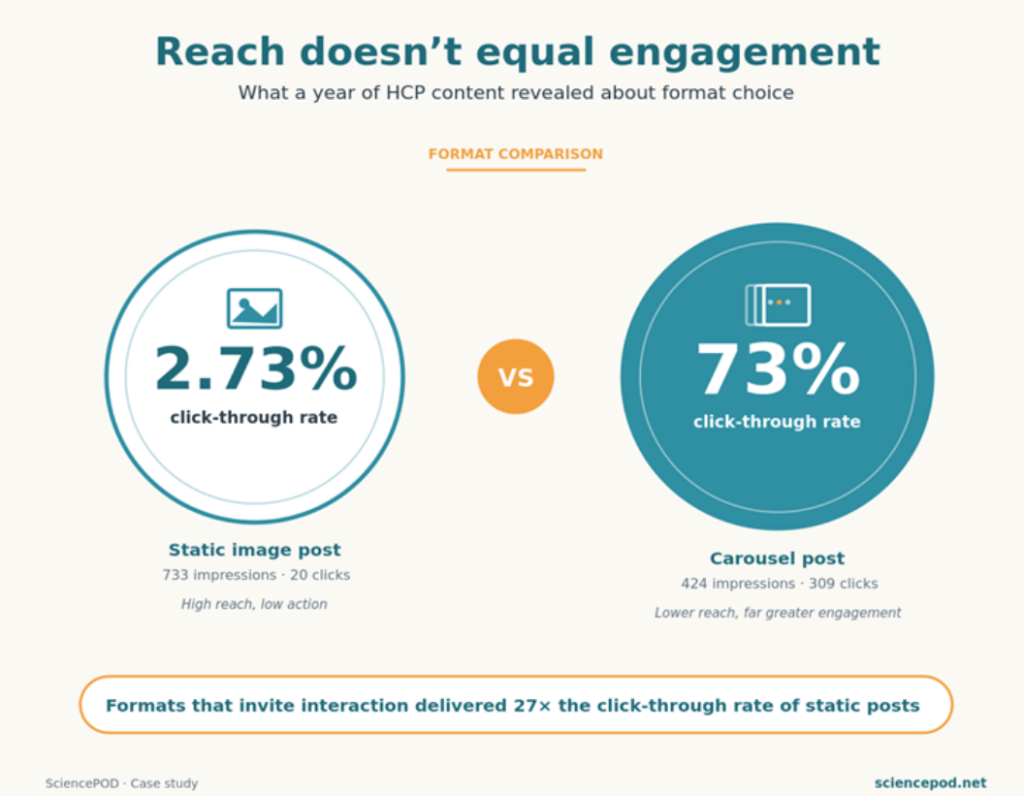
The campaign data provided a clear picture of what drove meaningful engagement. Overall, post views increased by 160% since the campaign launched. Article views for individual pieces grew between 33% and 1,000% over the campaign period, with content addressing clinical screening and nutritional management performing particularly strongly. Across social formats, the data highlighted a notable difference in performance between content types. Carousel posts generated a click-through rate of 73%, compared to….